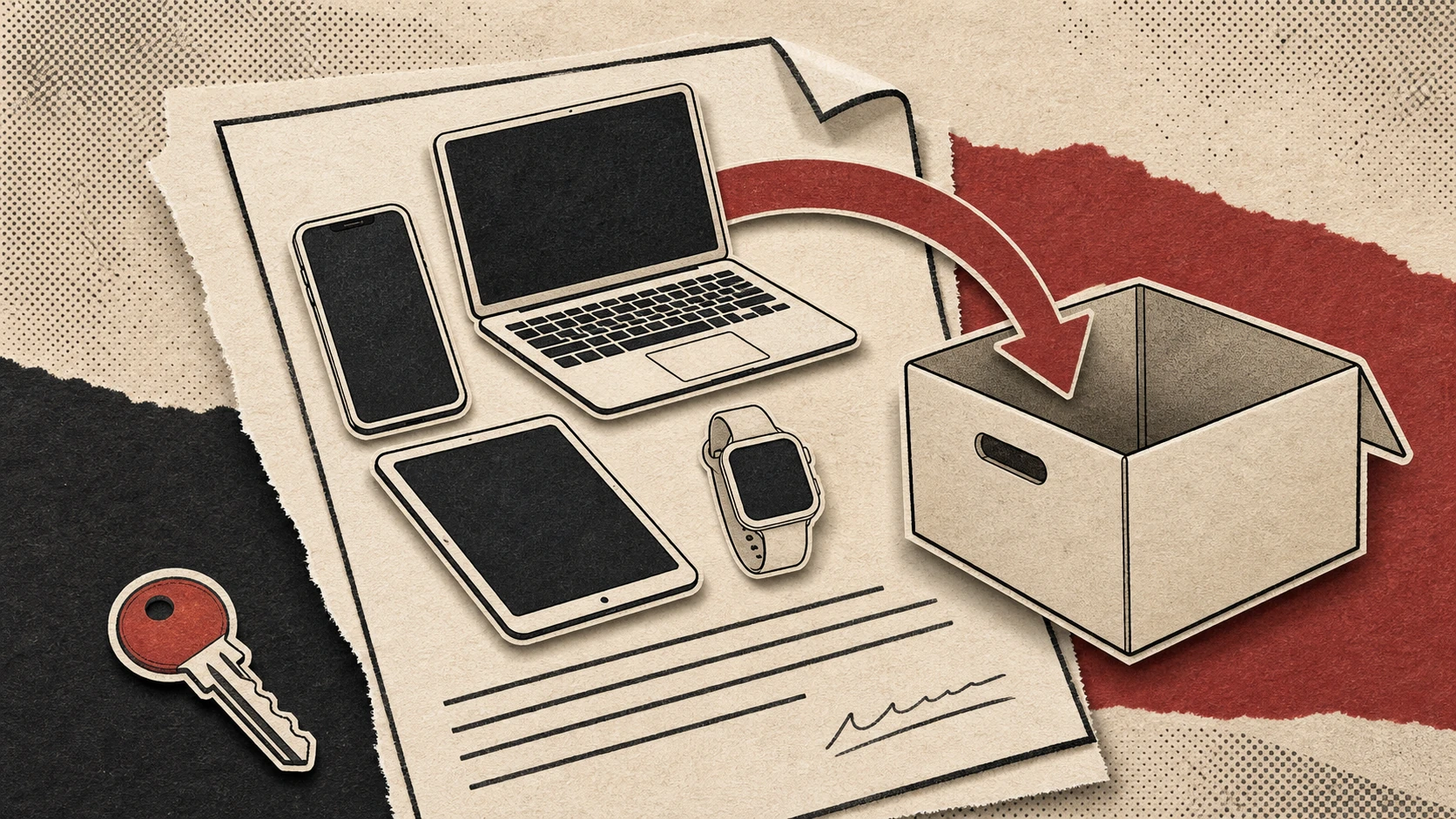
Apple has put one monthly program across four hardware families. Apple Upgrade launched in the United States on July 28 through Apple's website, app and stores, with leases provided by Klarna. Apple advertised starting payments of $17.99 for an iPhone and $11.99 for an Apple Watch.1
The word that decides whether the offer is cheap is lease. You are paying for use during a term, not automatically buying the device in installments. At the end, the important choices are return, upgrade or buyout. The monthly figure only makes sense after those conditions are added back in.1,2
What Apple Upgrade actually offers
Apple says the program covers eligible iPhone, Apple Watch, Mac and iPad purchases. Applications are subject to eligibility and credit approval by Klarna. Availability is limited to the United States, excluding US territories, so the announcement should not be read as a global financing change.1
Terms differ by product. Apple's shopping pages describe 12 or 24 month leases for iPhone and Apple Watch, and 24 or 36 month leases for iPad and Mac. A shorter term can raise the monthly payment while reducing how long you are committed.1
Apple Upgrade replaces the simple mental model of keep paying until the product is yours. The customer gets options at the end, but each option carries a consequence: send the device back, start another lease, or pay the stated amount to own it.1,2
- It is a US leasing program provided by Klarna.
- Credit approval and product eligibility apply.
- Ownership is not automatic at the end of the monthly term.
Why the advertised payment can mislead
A monthly number is easy to compare with a phone bill and hard to compare with a cash purchase. Multiply the payment by the number of months first. Then add any upfront amount, taxes, fees, insurance and end-of-term buyout. Only that total can be compared with the retail price.1,2
The return option has value if you normally replace hardware often. It can be poor value if you keep devices for four or five years, sell them used, or hand them to family members. A leased device does not become an older asset you can continue using for free.2
Damage standards also matter. A device that must be returned is not only a tool; it is property you are responsible for preserving. Before accepting, read what counts as normal wear, what happens after loss or theft, and whether AppleCare or another policy changes your liability.1
- Calculate total payments across the whole term.
- Ask what the buyout costs on the final day.
- Read return-condition and early-exit rules before checkout.
Three comparisons worth making
First compare the lease with buying the same configuration outright. Do not compare a base monthly lease with a higher-storage retail model. Storage, connectivity and warranty coverage should match.1
Second compare it with a conventional installment plan that ends in ownership. A higher monthly payment can still cost less if the final payment leaves you with a device that has resale value. The lease may win only if its upgrade flexibility matters to you.2
Third compare behavior, not just products. If a new plan encourages an annual upgrade you would not otherwise make, the relevant cost is the new habit. A program can be affordable each month and still increase total spending over several years.1,2
- Use the same model and storage in every comparison.
- Include resale value for an owned device.
- Model at least two complete upgrade cycles.
Who may benefit, and who should pause
Frequent upgraders who want predictable returns may like a single program across several Apple categories. A small business that refreshes equipment on a schedule may also value predictable terms, though business accounting and tax treatment need professional advice.1
People who keep devices until they fail should pause. So should anyone for whom a credit application, strict return condition or uncertain buyout would create stress. The lower entry payment does not remove the obligation; it stretches and reshapes it.1,2
Apple Upgrade is neither automatically a bargain nor a trap. It is a different ownership contract. The useful consumer response is to make the end of the lease as visible as the first monthly number.1,2
A lease can also complicate a mid-term change. Moving abroad, switching employers, losing a device or deciding to reduce monthly expenses does not automatically cancel the contract. Read the early-termination section and keep enough savings to cover the stated exit cost rather than assuming the device can simply be handed back.1,2
Environmental claims deserve the same arithmetic. Returning a device may support refurbishment, but a program that accelerates replacement can still increase manufacturing demand. Ask how returned hardware is graded and reused, then weigh that answer against keeping an existing device for another year.1,2
Before checkout, save a screenshot or PDF of the model, term, monthly payment, total of payments, buyout and return conditions. Promotional pages change, but the contract accepted on that day governs the obligation. A written comparison also makes it easier to notice when a trade-in or carrier credit would produce a lower ownership cost.1,2
- Good fit: planned, frequent upgrades with careful returns.
- Weak fit: long ownership, resale or hand-me-down use.
- Keep a copy of the exact contract shown at checkout.
Sources and method
Top Apps HQ compared the dated primary announcement with independent reporting, separated confirmed behavior from interpretation, and kept availability limits explicit.
- Apple Upgrade launches in the United States Apple · July 28, 2026 · primary
- Apple Upgrade leasing program launches for iPhone, Mac, iPad, and Apple Watch 9to5Mac · July 28, 2026 · independent