Health note: This is general health information, not medical advice. Follow local heat alerts. Seek urgent medical help for confusion, fainting, seizures, loss of consciousness, very high body temperature or other signs of heat stroke.
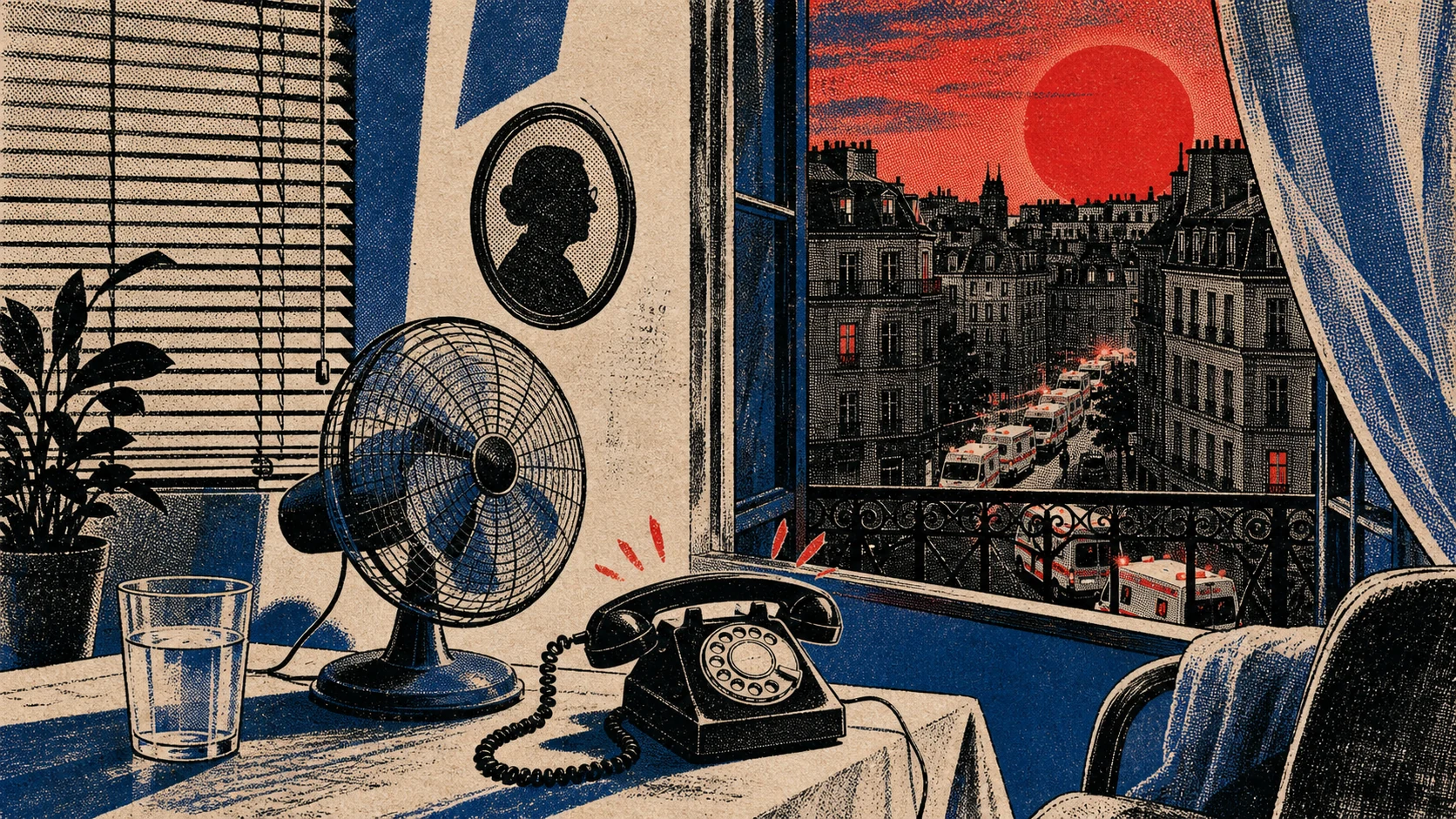
By June 30, the World Health Organization's European office described emergency rooms filling, ambulance records breaking and hospitals struggling with heat inside their own buildings. France reported medical-call increases of up to 50 percent in some cities. London recorded its highest single day of life-threatening ambulance calls.1
Spain's mortality system had estimated more than 300 heat-associated excess deaths over a few days, while Italy reported five deaths in 24 hours. Later reporting found 1,565 more deaths than expected over one week in the Paris region, where deaths more than doubled during the June heatwave. Mortality estimates can change as data are finalized.1,2
The numbers describe a public-health emergency, but the household response is unusually physical and ordinary. Keep daytime heat out. Use cooler night air when it is safe. Drink before thirst becomes strong. Check the person who lives alone. None of these measures is impressive; together they can keep a dangerous day from becoming a medical crisis.1
Heat risk accumulates indoors
An apartment can remain hot after the outdoor temperature begins to fall. Concrete, brick, roofs and upper floors store heat through the day. Warm nights remove the body's recovery period, especially for older people, infants, pregnant people and those with heart, lung or kidney conditions.1
WHO reported that about 60 percent of hospital admissions after emergency visits during the event involved people aged 75 and older. Risk is shaped by health and isolation as much as by the number on a weather app. A person living alone may not notice gradual confusion or weakness.1
Measure the rooms where people sleep and spend the afternoon, not only the outside temperature. If one room stays cooler because it faces away from the sun or sits lower in the building, treat it as the household cooling room. Move water, chargers and a chair there before the hottest hours. Keep medicines within their labelled storage conditions; move only those that can safely be kept in the cooler room.1
Use the building before buying another gadget
Close blinds and curtains on sun-facing windows during the day. Open windows at night when the outside air becomes cooler and local security and air-quality conditions allow it. Cross-ventilation works best when air can enter on one side and leave on another.1
A fan can improve comfort, but it does not lower room temperature and may not be enough during extreme heat. As general household guidance, use it to move cooler evening air or support evaporation, and follow local health advice when indoor temperatures are very high. A wet cloth and light clothing can help the body shed heat.
As a product-safety precaution, follow the air conditioner's installation and electrical instructions, keep the exhaust path clear and avoid overloading an extension lead. If cooling equipment cannot keep a vulnerable person safe, use a public cooling space early rather than waiting for symptoms.
Water, medicine and routine need a heat version
WHO advises drinking water before thirst becomes strong and avoiding sugary, alcoholic or heavily caffeinated drinks during severe heat. People with fluid restrictions or certain medical conditions should follow advice from their clinician rather than applying a general hydration target.1
Some medicines affect sweating, blood pressure, kidney function or alertness. Heat can also damage medicine left in a hot car or windowsill. Do not stop a prescription because of a heat warning. Ask a pharmacist how to store it and whether a clinician should review the plan during prolonged heat.
Move exercise, errands and outdoor work away from midday where possible. Italy introduced restrictions on outdoor work during the hottest hours in some regions, according to WHO. A household can make the same decision without waiting for a rule: reschedule effort, shorten exposure and identify shade before leaving.1
A phone tree is a cooling tool
WHO's simplest advice was to check older neighbors and relatives. A call can reveal that someone is dizzy, that a fan stopped working or that a room never cooled overnight. Agree on specific check-in times rather than a vague promise to call sometime.1
Ask practical questions: What is the room temperature? When did you last drink water? Can you reach the cooler space? Is your phone charged? If the answers sound confused or unusual, arrange an in-person check or contact local emergency services.1
Barcelona expanded a network of more than 500 climate shelters that included libraries, civic centers, parks and pharmacies. Paris activated a welfare-check register for older and vulnerable residents. Find the local equivalent before it is needed, including opening hours, transport and whether pets are allowed.1
Prepare before the next red warning
More than half of countries in the WHO European Region still lacked a comprehensive heat-health action plan, the organization said. Household preparation cannot replace city cooling, safe workplaces or functioning hospitals. It can reduce the number of decisions made while everyone is already tired and overheated.1
Write a one-page heat plan with the coolest room, two people to contact, the nearest public cooling space, medicine notes and transport options. Keep a thermometer, water containers and a charged power bank together. Check fans and window coverings before the forecast reaches emergency levels.1
The June event was not an unusual rehearsal that Europe can forget. WHO says the region is warming at more than twice the global average. Heat preparation now belongs beside smoke alarms and winter planning: a small routine maintained before the weather becomes dangerous.1,2
- Close sun-facing blinds during the day and ventilate with cooler night air when safe.
- Choose one cooling room and stock it before the hottest period.
- Schedule check-ins for older people and anyone living alone.
- Locate public cooling spaces and transport before a red warning.
Sources and method
WHO figures in the June 30 statement were treated as preliminary. A later France 24 report is used to show how mortality estimates changed after June, not as evidence available during the event. Practical advice follows WHO guidance and does not replace local alerts or medical care.
- Get prepared: current European Region heatwaves are a dress rehearsal WHO Europe · June 30, 2026 · primary
- Paris region's record June heatwave more than doubled deaths France 24 · July 17, 2026 · independent