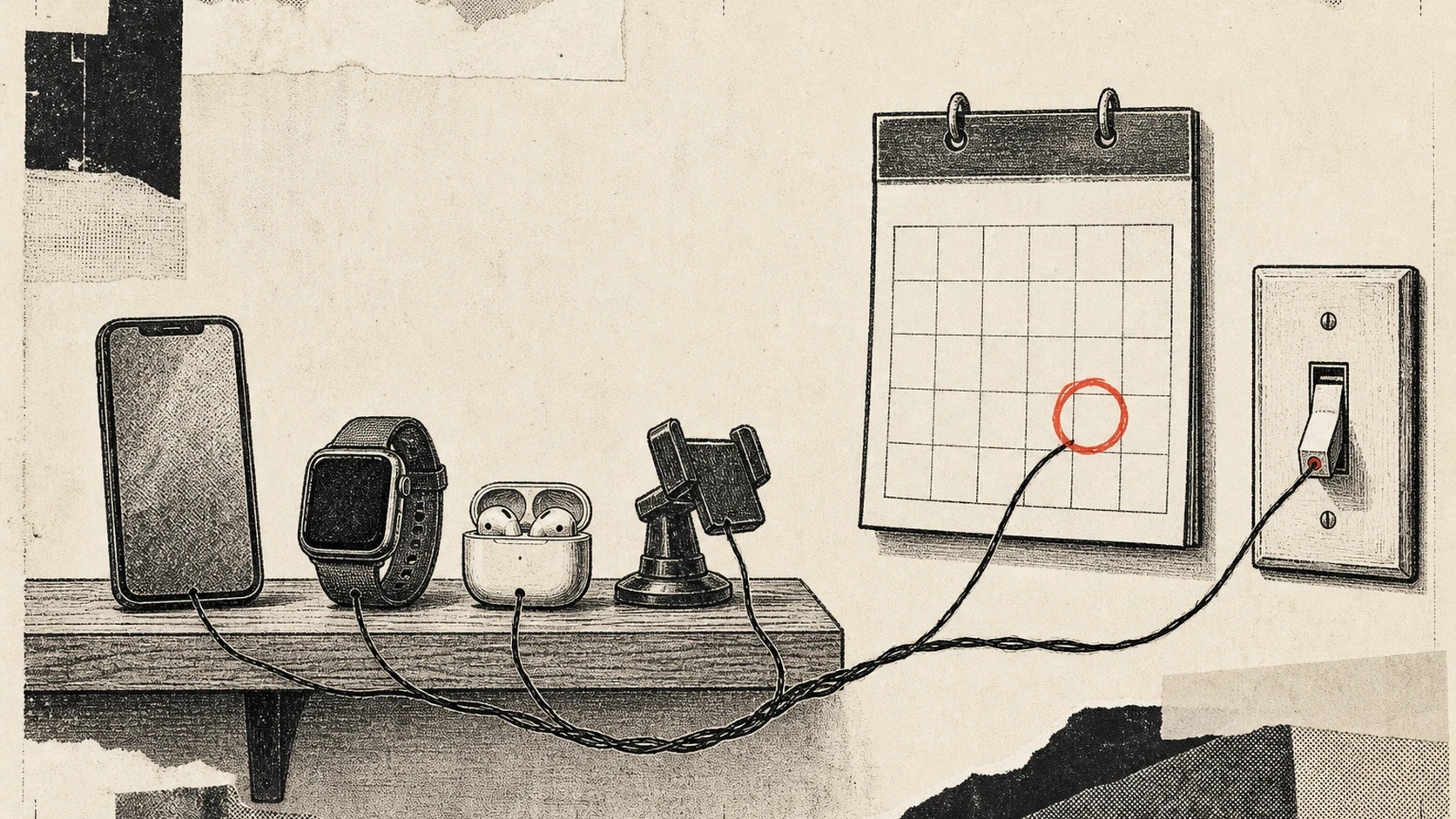
Google has been moving people from Assistant to Gemini for more than a year, and the timeline slipped more than once. In August it stopped being a rolling transition and became a date. An update inside Google's own announcement thread, stamped August 5, says that on September 4, 2026 most users will no longer be able to use or switch back to Google Assistant on a phone or tablet.1
The sentence that matters is the second half. Until now, someone who disliked Gemini could return to the older assistant. That option is what closes. Google's thread states it plainly: most users will no longer be able to use or switch back.1
The change also reaches past the phone. Google says that when Gemini becomes the assistant on a mobile device, it becomes the assistant on the peripherals paired to it, naming watches running Wear OS, compatible headphones and earbuds, and vehicles running Android Auto. Google says it emailed the users whose device or peripheral is affected.1
What Google actually committed to
Google's announcement is short, and it is worth separating what it says from what has been written around it. It says the classic Assistant is being discontinued on mobile, that Gemini is now the assistant experience on Android, and that September 4 is the day most users lose the ability to use it or switch back on a phone or tablet.1
It also draws the line around paired hardware. A watch running Wear OS, a set of Gemini-compatible earbuds and a car running Android Auto all take their assistant from the phone. When the phone moves, they move. That is a single sentence in Google's post, but for anyone who talks to a watch on a run or to earbuds while cooking, it is the part that changes the most.1
What Google's thread does not do is enumerate what stops working. It names a date and a scope, not a list of retired commands. That gap is the practical problem for readers, and it is why the checks below matter more than any summary of Gemini's strengths.1
The exceptions, and who is reporting them
Two exceptions have been reported, and neither appears in the August update itself. 9to5Google and Search Engine Land, working from the email Google sent affected users, reported that removal begins on September 4 and may take a few weeks to reach everyone, and that cars with Google built in keep Assistant working past that date. Google built in is the version baked into the car itself, not Android Auto projected from a phone.2,3
The second exception is older and comes from Google's own earlier documentation: devices that do not meet the minimum requirements to run Gemini, such as those with less than 2GB of RAM or older Android releases, keep Assistant unchanged for now. An old phone may therefore outlive a new one on this particular feature.1,2
Speakers, smart displays and televisions are a separate track. Google has said Gemini is coming to Google TV devices and to Google Home speakers and displays, but that is a different rollout with its own timing, and the September 4 date does not describe it.2
What to check before September 4
The useful work here is small and specific. It takes about ten minutes, and it is far easier to do while both assistants still exist than after one of them is gone.1
- Open your routines and read them. Anything built on Assistant routines is the most likely thing to behave differently, and the list is usually shorter than people remember.
- Test the commands you use without thinking. Setting a timer while your hands are wet, adding to a shopping list, calling one specific person, starting a playlist in the car.
- Try them on the watch and the earbuds, not only the phone. These follow the phone, and their microphone and screen constraints make failures more likely.
- Check whether anyone else in the household depends on a shared speaker or a paired device, especially a person who did not get the email because the device is not theirs.
- If something you rely on does not survive the switch, write down what it was. It is the only way to search for a replacement later without reconstructing it from memory.
Why a working product gets a shutdown date
Assistant and Gemini are not two versions of one thing. Assistant was built around a fixed set of actions it could perform reliably. Gemini is a general model that can hold a conversation, and the two fail in different ways. A model that can explain a recipe may still be a worse tool for setting a nine-minute timer, and that trade is the substance of the complaints Google has collected in its own community threads.1,2
The transition has already slipped once. Google originally planned to complete the mobile upgrade by the end of 2025, then said in December 2025 it was adjusting the timeline to deliver a smoother transition and would continue into 2026. The August update is what that adjustment finally resolved into.1
There is a reasonable case for a single assistant. Maintaining two voice systems across phones, watches, cars and headphones is expensive, and a split experience confuses people more than it helps them. The cost lands on the users whose particular habit sat inside the older system, and Google has not published a mapping of what moves and what does not.1,2
The habits most likely to break
Voice assistants get used in narrow, repetitive ways. Most people have perhaps six commands they issue hundreds of times, and almost never explore beyond them. That is why a change like this rarely feels like an upgrade, even when the new system is more capable overall. The six things you say are exactly the six things you never chose deliberately, so any drift in behaviour reads as breakage.1,2
The commands that tend to matter most are the ones issued when hands are occupied. Timers in a kitchen. Hands-free calling while driving. Turning a light off after getting into bed. A quick unit conversion mid-task. These are not features anyone thinks about until they stop responding the way they used to, and they are also the ones hardest to test after the fact, because you only notice at the exact moment you cannot stop and investigate.1
Shared devices deserve separate attention. A household speaker or a car used by two people belongs to whoever set it up, and Google says it emailed the users whose device or peripheral is affected. Someone in the house may therefore be relying on a device without having received any notice about it at all.1
If Gemini is not what you want
There is no supported path back after the switch on most phones, and it is worth being clear about that rather than implying a workaround exists. Google's wording covers both directions: using the classic Assistant and switching back to it.1
Android does allow a different default assistant app, and that setting is not removed by this change. It is a real option, and it is also a smaller one than it sounds, because the deep integrations are what people actually use. A third-party assistant that cannot reach your alarms, your lights or your car has replaced the wrong half of the product.1,2
The other option is to stop using a voice assistant on the device and let the phone be a phone. That sounds like a defeat, and for a certain kind of user it is simply an accurate reading of what they got from Assistant: a timer and a flashlight, neither of which needs a conversational model behind it.1
For anyone who does want to stay, the transition is a reasonable moment to look at what Gemini adds rather than only at what it removes. It holds context across a conversation, which the older assistant could not, and that is genuinely useful for anything involving a follow-up question. Whether that outweighs a timer that now takes two attempts is a judgement only the person setting the timer can make.1,2
What we do not know
Three things stay open. Google has not published a list of Assistant features that will not exist in Gemini, so nobody can check their own habits against a document. The phrase most users leaves the exceptions undefined beyond the minimum-requirements case. And the few weeks that removal may take, reported by 9to5Google from Google's email rather than stated in the public thread, means September 4 is the start of a window rather than a clean cutover.1,2
None of that is a reason to panic, and none of it is a reason to trust a summary over your own device. Ten minutes of testing answers more than any list, including this one.1
Sources and method
The date comes from Google's own announcement thread in the Gemini Apps Community, which carries an update stamped August 5, 2026. The wording quoted here is Google's. Details that Google does not state in that thread, including how long the removal takes to reach everyone and the position of cars with Google built-in, are attributed to 9to5Google and Search Engine Land, which reported the change on August 4 after Google emailed affected users. We did not independently test which individual voice commands change.
- Here's an update on our work to upgrade mobile Assistant devices to Gemini Google · August 5, 2026 · primary
- Google Assistant shutting down on Android and Wear OS in September 9to5Google · August 4, 2026 · independent
- Google Assistant to be discontinued on Android starting September 4 Search Engine Land · August 4, 2026 · independent