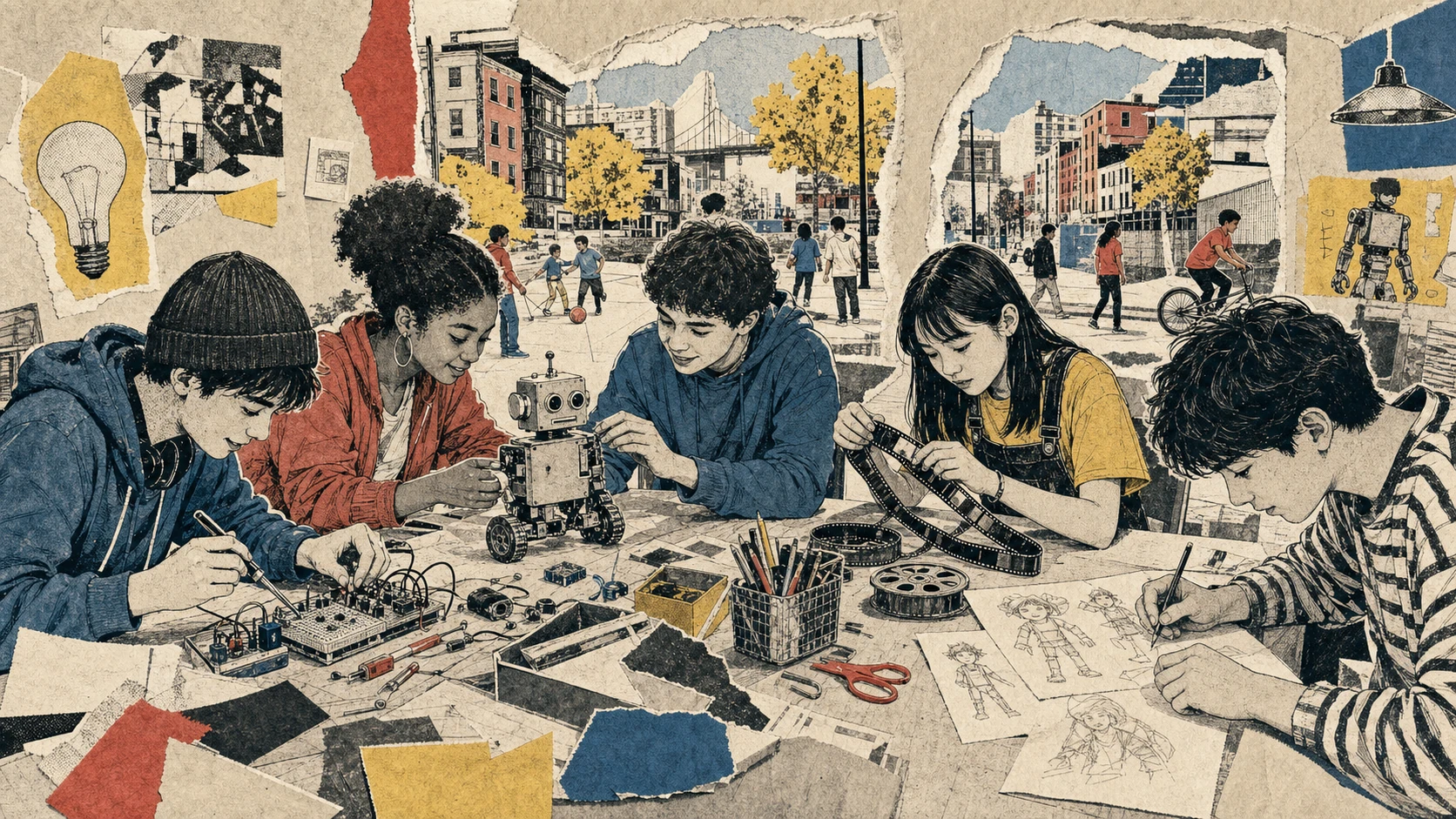
Buenos Aires opened its third TUMO center on July 31 in Chacarita. The free program is for young people aged 12 to 18 and combines technology, design and creative production. Students choose areas and advance through projects rather than following one identical class sequence.1,2
The opening is local news with a broader lesson. Access to AI education does not have to begin with lectures about models or expensive subscriptions. It can begin with a place where a teenager makes a game, edits a film, programs a robot and learns when an AI tool helps or gets in the way.1,2
What opened in Chacarita
The city government announced registration in July while the site was in its final construction stage. It described the location near Federico Lacroze station as the third TUMO center in Buenos Aires after Nunez and Barracas, with public transport access from several parts of the city.1
Cadena 3 reported the official opening on July 31. The center offers free workshops in areas including programming, video games, design and artificial intelligence. The target age is 12 to 18, and the format allows students to choose activities and progress at their own pace.2
Free admission is the practical headline, but capacity and schedules still matter. Families should confirm registration status, attendance expectations and available sessions through the official city page rather than assuming every course has an immediate place.1,2
- The Chacarita site is the city's third TUMO center.
- Participation is free for ages 12 to 18.
- Registration and current places should be checked with the official program.
Project work changes what students learn
A project-based center asks a different question from a conventional course. Instead of completing a sequence because it is on the syllabus, a student chooses something to make and acquires tools as the project demands them. The result can be a film, game, design, animation or piece of code.1,2
That structure can make technology less abstract. Debugging becomes a way to make the robot move. Editing becomes a way to make a story understandable. AI becomes one tool among many, not a subject that automatically replaces drawing, writing or programming.2
Self-direction is not the same as learning alone. Mentors, peers and a physical workspace provide deadlines, examples and feedback. For adolescents who have internet access but no quiet place, equipment or experienced adult nearby, the room itself may be as valuable as the curriculum.1,2
- Choose a project small enough to finish.
- Keep drafts so progress is visible, not only the final result.
- Ask students to explain tool choices, including when they rejected AI output.
How families can judge whether it fits
Start with the teenager's interest, not the prestige of a topic. A student who wants to make music or animation may learn programming indirectly and persist longer than one assigned to a fashionable AI track. The best first project is the one they will return to next week.1,2
Ask how much time happens on site, what equipment is supplied and whether work can continue at home. Also ask how the center handles accounts, images, voice recordings and other personal data created during projects.1
Look for a balance between freedom and feedback. A strong program should let students choose while still teaching foundational habits: file organization, source attribution, safe sharing, iteration and honest explanation of what the student made versus what a tool generated.1,2
- Visit or attend an orientation before committing to a schedule.
- Ask about accounts, media permissions and project ownership.
- Prefer visible feedback and finished projects over vague exposure to tools.
A useful model beyond one city
Creative technology programs are often framed as workforce pipelines. That can be part of the value, but teenagers also need places to experiment without every project becoming a career bet. A failed game or strange animation can still teach planning, collaboration and persistence.2
Buenos Aires now has three locations, which gives the model a chance to reach different neighborhoods rather than concentrating opportunity in one flagship building. The next measure is not opening-day attendance. It is whether students can keep participating, finish work and move into deeper study if they choose.1,2
For other cities, the transferable idea is modest: free access, local transport, varied creative tracks and mentors around real projects. The expensive equipment matters less if the program cannot create belonging and regular practice.1,2
The program can also help parents evaluate AI work without pretending they must master every model. Ask the student to show the original material, explain what the tool changed and identify one error they corrected. That conversation rewards judgment rather than the speed of producing a polished result.1,2
For schools nearby, the center may work best as a complement rather than a competitor. Teachers can refer motivated students, share community problems that need projects and help young people connect experimental work with mathematics, language and civic knowledge.1,2
Students should leave with portable evidence of learning where program rules allow it: source files, process notes, screenshots and a short explanation of decisions. A portfolio that shows revision and attribution is more informative than a certificate alone, especially when AI helped produce part of the final work.1,2
- Judge success by continued participation and completed work.
- Keep creative exploration alongside career preparation.
- Expand access geographically, not only by publishing online lessons.
Sources and method
Top Apps HQ compared the dated primary source with independent reporting, separated confirmed behavior from interpretation, and kept access or safety limits explicit.
- Registration remains open for TUMO Chacarita Buenos Aires City Government · July 21, 2026 · primary
- The new TUMO center in Chacarita offers AI workshops for adolescents Cadena 3 Argentina · July 31, 2026 · independent